Understanding the link between
your nervous system and physical pain
Have you noticed that your pain gets worse during stressful weeks, even when nothing new has happened to your body?
You are not imagining it. And you’re not doing anything wrong.
Stress-related pain does not mean your pain is imagined, exaggerated, or “all in your head.” It means your nervous system is doing exactly what it learned to do to protect you.
How Stress and Chronic Pain Are Connected
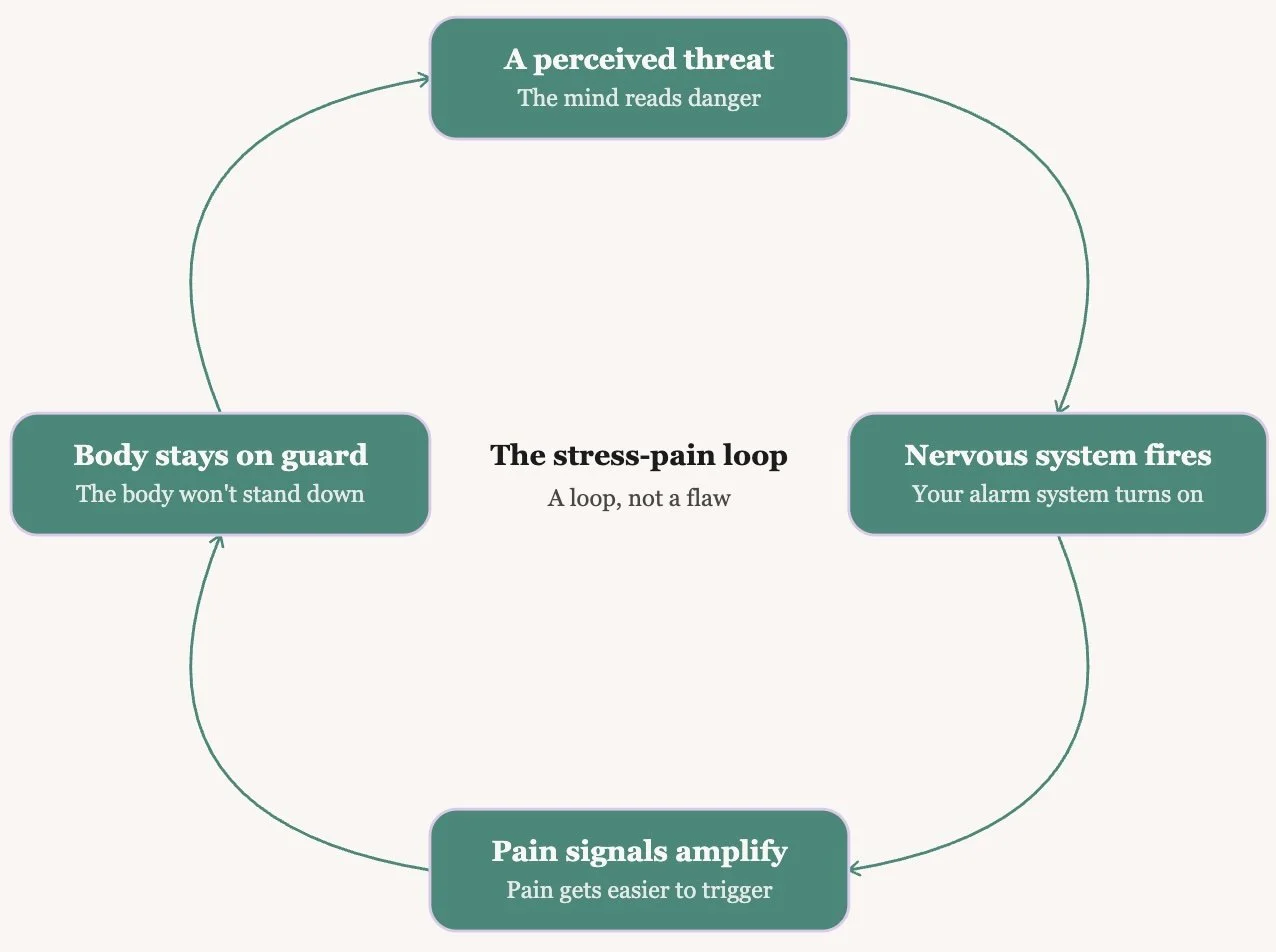
Stress activates your body’s threat system, the part of your nervous system built to keep you safe in dangerous situations. Activated occasionally, it’s helpful. Activated for long stretches of time, it starts to change how your body processes pain.
In chronic pain conditions, the nervous system can become sensitized. Pain signals get amplified and triggered more easily, even without any new injury or damage. Over time, your body learns to stay on guard. Pain becomes a signal of protection rather than a signal of damage.
What This Can Look Like
For many people, this shows up as:
pain flares during emotional stress or conflict
symptoms that don’t match imaging or lab results
feeling “on edge” or hyper-aware of bodily sensations
exhaustion from constantly managing symptoms
frustration with being told to “just relax” or “reduce stress”
If any of that sounds familiar, you’re far from alone.
Why “Trying Harder” Often Makes It Worse
When pain is connected to nervous system activation, pushing through symptoms or forcing yourself to relax can backfire. That’s because your nervous system doesn’t respond to pressure, it responds to safety.
Trying to override pain signals without addressing the underlying stress response can actually increase fear, tension, and frustration, which further sensitizes the system. This isn’t a personal flaw. It’s how protective systems work.
What Actually Helps
Because stress and pain are linked through the nervous system, real relief comes from reducing your nervous system’s overall load, not from fixing or controlling your body. This often looks like:
creating a felt sense of safety in the body over time
emotional validation and support
consistent, gentle regulation rather than quick fixes
working with providers who understand both pain and trauma
Relief doesn’t come from doing more. It comes from helping your body feel safer.
A Note on Therapy for Chronic Pain
If you’re living with chronic or pelvic pain, therapy that works with the nervous system can be an important part of healing, alongside your medical care, not instead of it.
Healing isn’t about fixing yourself. It’s about supporting your body and helping it soften and let go.
Learn more about therapy for chronic pain and pelvic pain →
Want to keep this guide?
Download the printable PDF version below.
If this resonated with you,
you’re welcome to reach out for a consultation call to see if working together might be helpful.